The same questions, every day
The answer is already written down, but someone still has to find it and send it again. People become the search function for the team.

AI agents and workflows your team needs, built in your existing Microsoft 365 with Copilot Studio and Power Platform. Your data stays in your tenant, with permissions intact.
agents
knowledge
recent
hr lead
Which policies cover new parents?
Three apply: Paid Time Off, Flexible Working, and the Parental Leave FAQ. Ask me about any of them.
Employee handbookp.22
hr lead
How much parental leave do I get?
Parental leave is managed by People & Culture. Full-time employees accrue 16 weeks at full pay after 12 months of continuous service.
Paid Time Off policyp.4Parental leave FAQp.1
grounding
Passages retrieved for the last answer.
“…16 weeks at full pay after 12 months of continuous service…”
“…notify People & Culture at least 10 weeks before the leave start date…”
retrieval
The problem
The answer is already written down, but someone still has to find it and send it again. People become the search function for the team.
A policy gets updated while an old answer keeps circulating in email and chat. It gets harder to tell which version someone is relying on.
The happy path works. Real permissions, missing information and exceptions arrive later, and someone has to keep the automation running by hand.
What we do
An assessment of your Microsoft 365 tenant. You get a written report on what is worth building, what isn’t, and what needs to be in place first.
One grounded agent in production, with cited answers from your documents and refusals where the answer isn’t there. The scope includes checking those behaviours before handover.
The delivery window is agreed after the assessment, before the build starts.
Automation and connectors around the agent, with DLP and environment strategy. You get a scoped extension with documented boundaries and ownership.
Timing is agreed after the assessment, with each extension scoped before work starts.
App Library
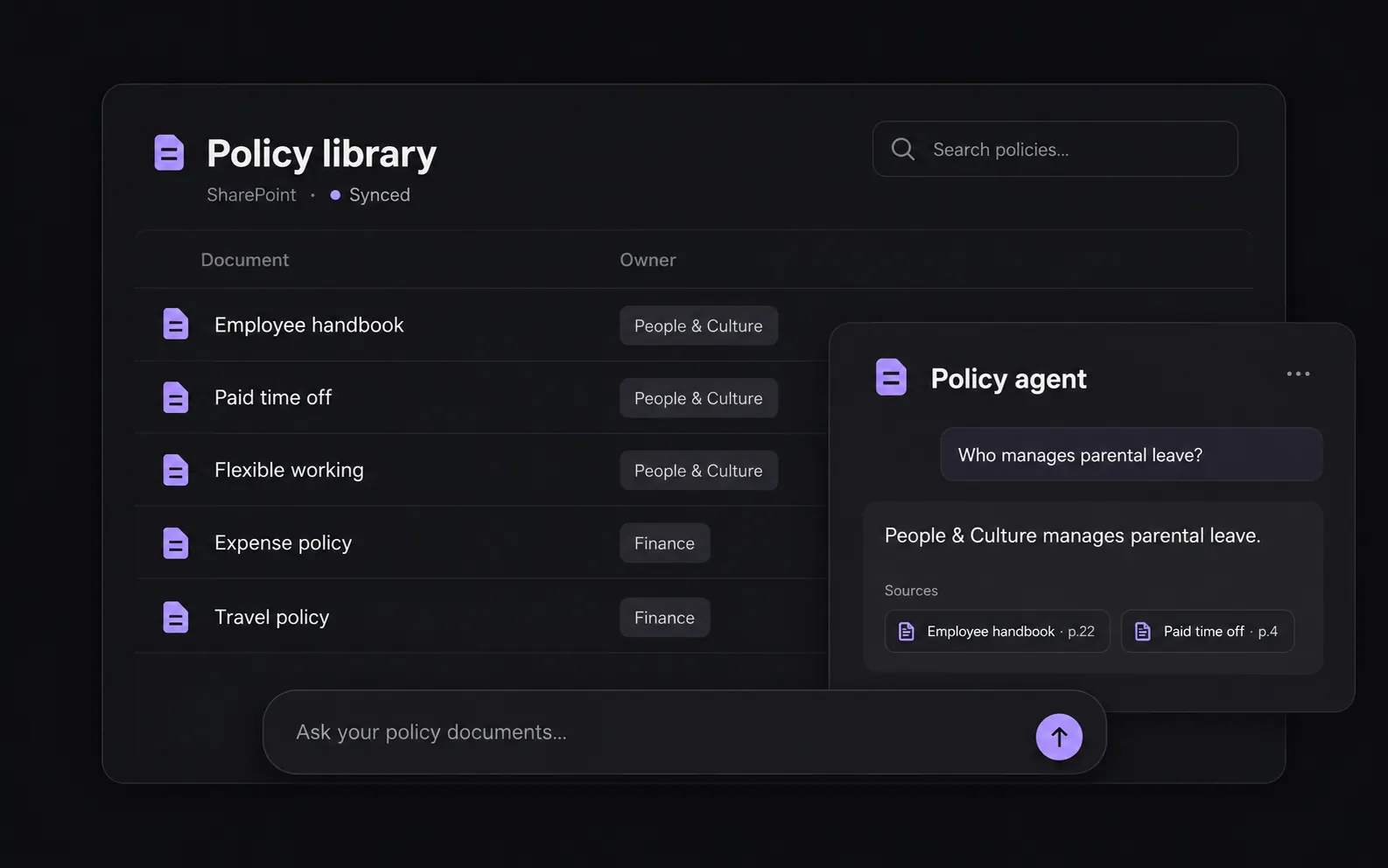
Ground your answers
Policy and Handbook Assistant
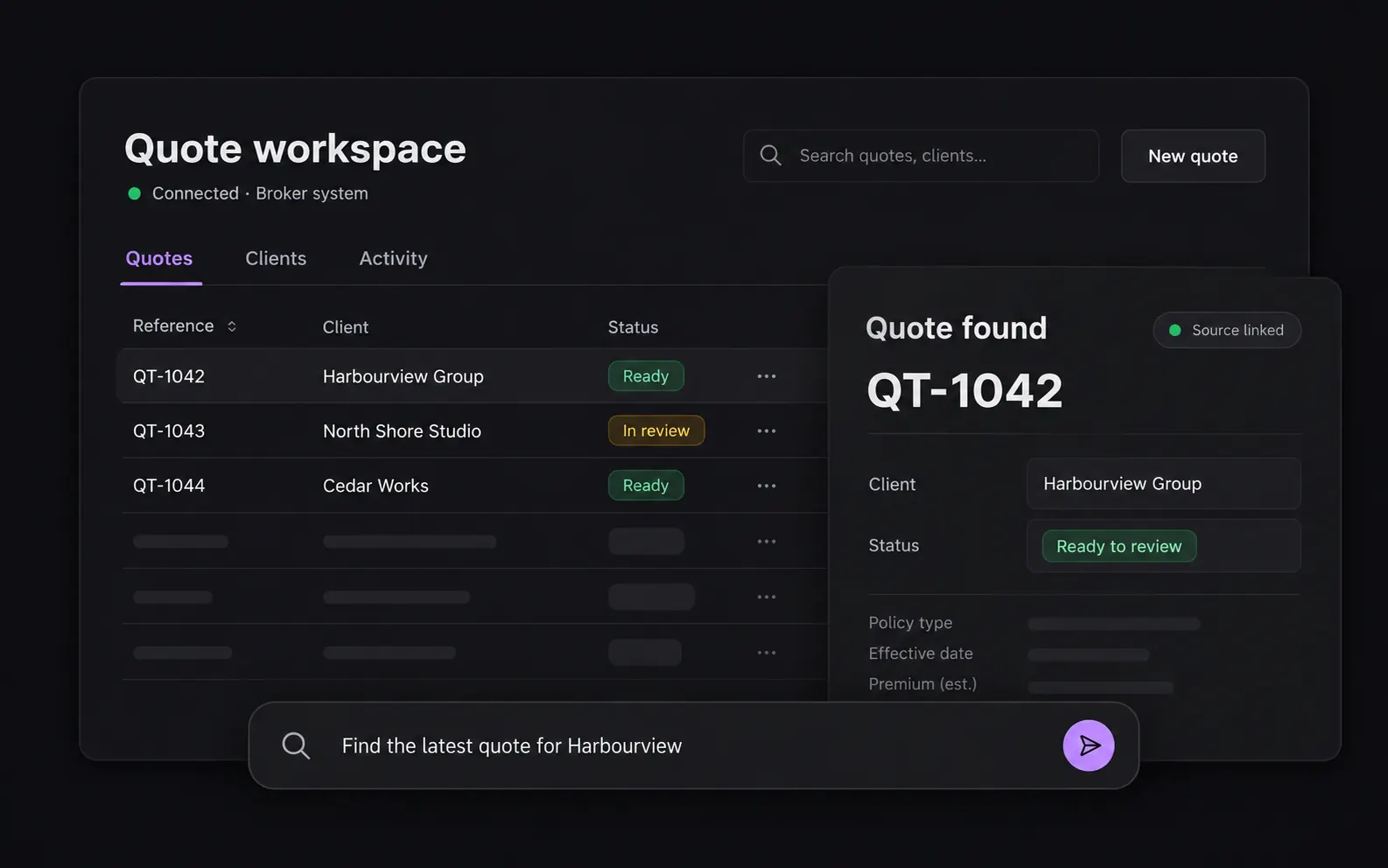
Connect your systems
Quote Lookup
Automate the routine
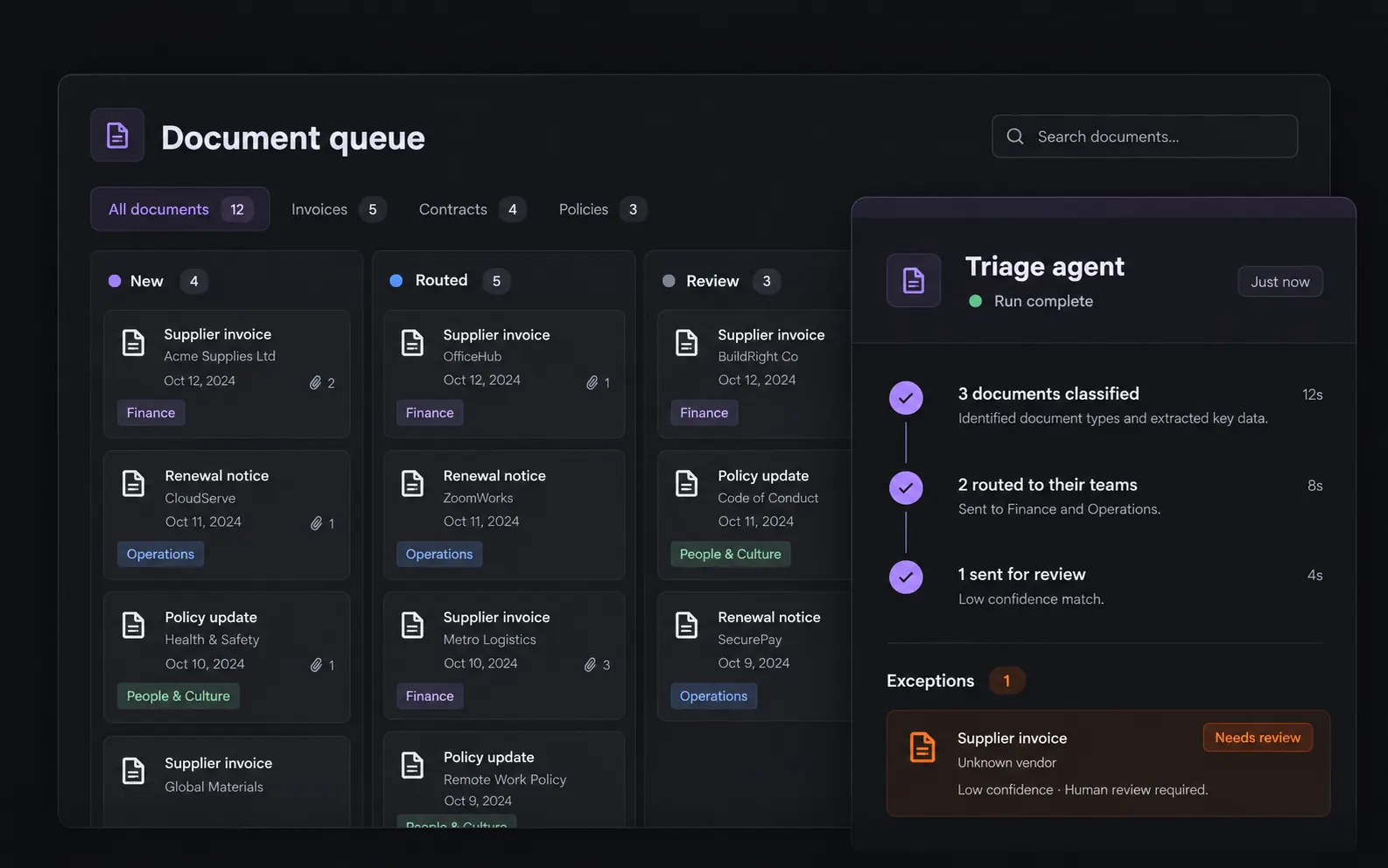
Classify and route incoming documents, with uncertain cases sent to a human review queue.
Document Triage and Routing
Explore more apps
How an engagement runs
Describe the process, who uses it and what is going wrong. We check whether an assessment is the right next step.
We review the tenant, documents and constraints, then deliver a written recommendation on what to build and what to leave alone.
We agree the deliverable, acceptance checks and delivery window. We build against that scope and check it with the people who will use it.
You receive the working build and documentation covering how it works, its limits and how to maintain it.
Industries
 Insurance brokerages
Coverage questions come back constantly while wordings and endorsements keep changing underneath the answer.
 Accounting firms
The same client questions arrive every cycle, and the right answer depends on which guidance is current.
 Property management
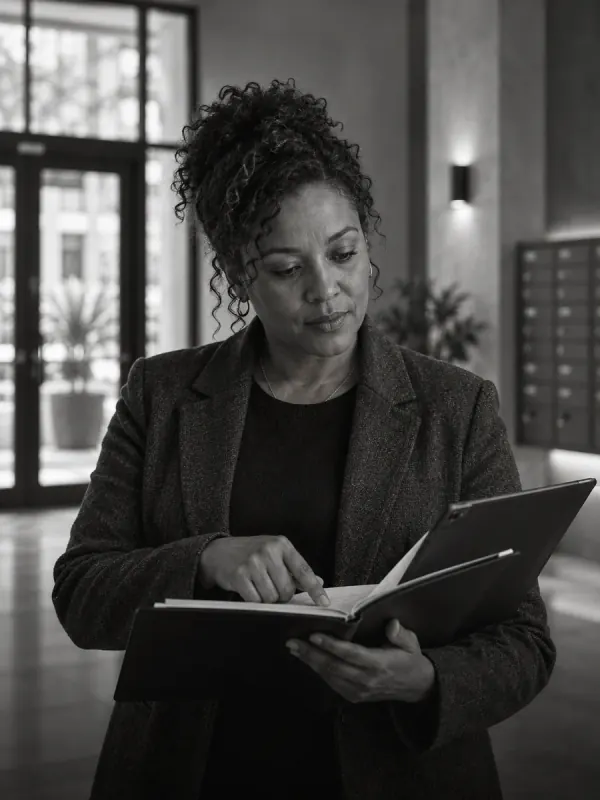
Questions about what a lease or a building rule says, where the document is different for every property.
 Law firms
The answer is in a document the firm already holds, and finding the current version is most of the work.
 Construction and trades
The current method or safety document is needed where the work is happening, not where the files are.
 Non-profits
Programme rules, funder conditions and internal policy sit in documents, and the people who know them best are often part-time or volunteers.
 Professional services
The same process questions route to the same person, and the document that answers them is not where people look first.
This list is indicative, not exhaustive. The qualifier is a Microsoft 365 tenant and a document set that changes, not the industry.
FAQ
Answers about Copilot Studio licensing, data, tenant access, document changes, delivery and handover from Oustack.
Not necessarily. Copilot Studio has standalone licensing and consumption options; it does not require buying Microsoft 365 Copilot for every user. Microsoft 365 Copilot licences also include some agent capabilities, so an existing licence can change what needs to be purchased.
The assessment confirms what your tenant needs for the proposed users, publishing channel, actions and connected services. Licence entitlements and consumption rules change, so we check the current Microsoft terms before recommending a purchase.
Grounding retrieves relevant information to answer a question; it does not, by itself, train a model on your documents. For the Azure OpenAI-backed features covered by Microsoft’s privacy FAQ, customer data is not used to train Microsoft’s Copilot AI models unless the tenant opts in, and prompts and responses are not used to train third-party models.
This is cloud processing, not a promise that all data stays in one tenant or in Canada. Knowledge files can be copied into Dataverse, activity history can use Microsoft 365 storage, and connectors or external models can send data to other services under their applicable terms. The assessment checks the chosen model, data sources, permissions, regions, retention and optional data-sharing settings against current Microsoft documentation before a build is agreed.
It depends on the source. A file uploaded straight into an agent can be read by anyone who can use that agent, because the upload does not carry the file’s original permissions with it. The same document connected through SharePoint or OneDrive is checked against the person asking, and sign-in has to be switched on for that check to happen.
The assessment checks this before anything is built: which sources are used, who can reach the agent, and whether someone could receive an answer drawn from a document they could not open themselves. Where that risk exists, the fix is usually the source or the audience, not the wording of the prompt.
You do not need to tidy the whole document library before the assessment. We start with a representative sample and the questions your team asks most often, then look for missing guidance, conflicting versions and unclear ownership.
Before a build, we agree which documents the agent can use, who owns them and how outdated versions will be retired. If the source material needs work first, the assessment identifies what to fix and why.
If you can describe what is going wrong, that is enough to start. We will tell you whether an agent is the right answer, including when it isn't.